
Markets have continued to deliver strong returns over the past few years, and with that growth comes both opportunities and considerations for investors. In the latest update from Connecticut Wealth Management’s (CTWM) Investment Committee, John Shanley, Partner & Managing Advisor, and Josh Sweeney, Chief Investment Officer, share the firm’s perspective on strategies to keep in mind as 2026 moves forward.
Preparing for Market Volatility
From 2023 through 2025, markets delivered strong returns as inflation cooled, interest rates stabilized, and corporate earnings remained resilient. Yet history shows that periods of strong performance are often followed by increased volatility.
As the chart below illustrates, looking at long-term data for the S&P 500, intra-year drawdowns occur regularly, even in years that ultimately end with positive returns. Additionally, when we’ve seen periods of prolonged positive performance in sequential years, drawdowns tend to follow. This is not a prediction of market volatility, just the natural progression of the market. Pullbacks, corrections, and rebounds are simply part of a full market cycle.
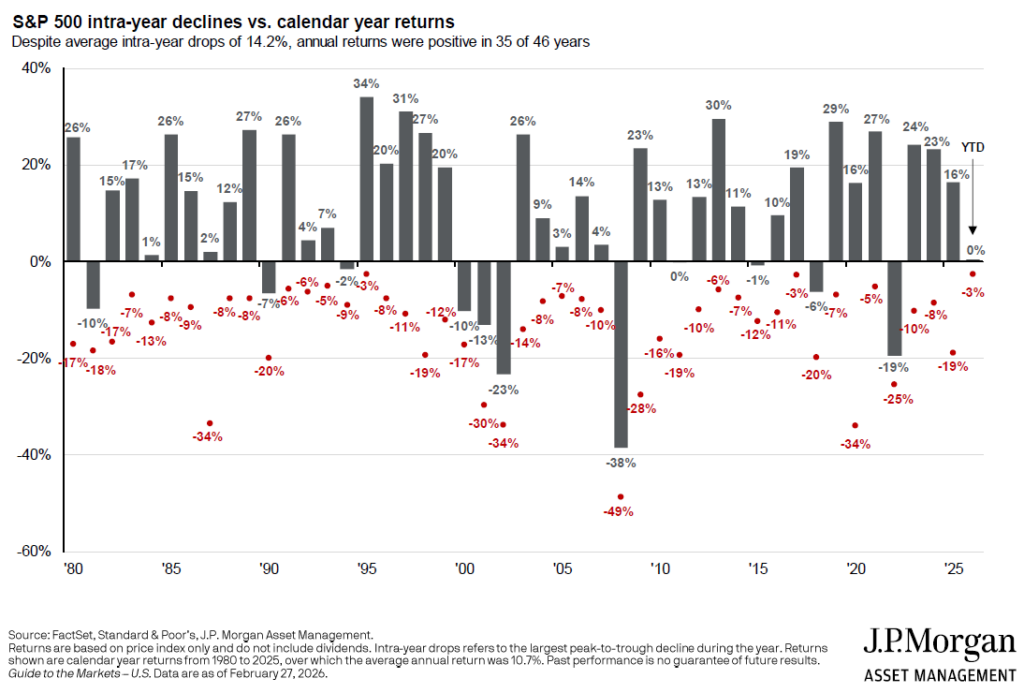
Rather than trying to predict when volatility will occur, we believe preparing your portfolio for potential volatility is the best approach to weathering market downturns.
- Revisit your allocation: Strong markets can cause portfolios to drift from their intended mix. For example, a portfolio designed to hold 60% equities may now be closer to 70% simply due to market performance. Rebalancing helps bring the portfolio back in line with your long-term plan.
- Strengthen your financial cushion: If you expect to fund a major expense in the next 1 to 2 years, setting aside those funds in a high yielding money market vehicle can help you to avoid selling investments at depressed prices during a downturn.
- Maintain a long-term perspective: Market pullbacks and recessions are temporary parts of longer-term cycles. We believe staying disciplined and focused on your plan is what ultimately drives long-term investment success. Checking in with your advisor when there are concerns with the market can help reassure you and stay the course.
Capital Gains and Tax Planning in 2026
The strong market performance from 2023 through 2025 has led to meaningful growth across many client portfolios. While this growth is a form of success, it can also cause portfolios to drift away from their intended allocation over time. Periodic rebalancing helps bring portfolios back in line by trimming appreciated positions, maintaining diversification, or raising cash for upcoming needs.
In some cases, selling appreciated investments as part of this process may trigger capital gains taxes. While taxes are never fun, they can be an unavoidable side effect in the realization of investment gains. As always, these portfolio adjustments are made thoughtfully and on a personalized basis as part of your broader financial plan. Your advisor can help evaluate potential strategies and discuss planning considerations for your portfolio as we look ahead to 2026.
Realizing gains is a natural part of long-term investing, and while taxes can’t be eliminated, they can be managed as part of your broader financial plan.
Positioning Portfolios for a More Volatile Environment
As we look ahead, many clients have shared concerns about market volatility—and with good reason. After several strong years of returns and shifting economic conditions, we expect to see continued market volatility for the next 12-24 months.
At CTWM, our goal isn’t to predict volatility. It’s to make sure portfolios are prepared for it.
When reviewing portfolios coming into 2026, we’ve implemented a few adjustments: Our first focus has been increasing exposure to large-cap stocks— specifically value companies with durable cash flows, strong balance sheets, and proven business models. These stocks can provide stability when markets are turbulent and act as a ballast for portfolios during periods of volatility.
Our investment committee is also continuously committed to improving efficiency within portfolios. The biggest opportunity in today’s market environment is in the case of fees. An example of this is being reflected in our emerging markets holding. We are beginning the process of transitioning from a higher-cost mutual fund to a much more cost-effective ETF option. Small adjustments such as these can have a large impact to portfolio performance over the long term, and we remain committed to evaluating investment products as fees continue to be a focus of the industry.
These adjustments are designed to help our clients navigate 2026, keeping portfolios aligned with their long-term goals and the aspirations they’re working toward.
Wrapping Up
The market environment will continue to evolve in today’s constant news cycle, and periods of volatility are a natural part of long-term investing. Maintaining a disciplined approach, aligning portfolios with long-term goals, managing taxes thoughtfully, and making strategic adjustments when appropriate helps investors stay confident that their financial plan supports their long-term aspirations.
Disclaimer: This information or presentation is for educational purposes only and should not be construed as personal investment advice. This should not be considered a recommendation of any particular investment strategy or security. Asset allocation and diversification may be used in an effort to manage risk and enhance returns however it cannot ensure profitable returns or protect against risk in any market environment. Investing involves risk and past performance is not indicative of future results. Please consult with your financial professional before making any financial decisions. This was prepared using third-party sources considered to be reliable; however, accuracy or completeness cannot be guaranteed. The information provided will not be updated at any time after the date of publication.